I recently underwent my ninth hip surgery: a complex left total hip replacement. Doctors have myriad methods for numbing and managing surgical pain. Nerve blocks, spinals, opioids, ice, IV medication, oral medication and more. The numbness doctors gift their patients is temporary, though. I know something traumatic has happened to my body. I know it should hurt beyond understanding. I brace for the pain to come. Bit by bit, the numbness recedes and the pain sets in. Despite all preventative measures, it is, at times, agonizing. Thinking you can undergo a surgery without pain is naive. Feeling that pain is part of the process. The rehabilitation and therapy I undergo, while painful, is also part of the process.
It is part of healing.
Brian’s sudden death three years ago left me numb and unfeeling. Early breakthrough pain manifested in physical ways including panic attacks, illness and sleepless nights. That first year was a dark blur, punctuated with selling our home, buying our new one and surviving all of the “firsts.” Profound loneliness set in during year two. That was also the year I learned the “firsts” are difficult in their own way, but the seconds are worse.
Year three isn’t easier, but it is notably different. This past year has been transformative in some ways. The darkness and loneliness, while still present, no longer define my every day. The numbness recedes more each week, uncovering more feeling and, with it, pain. At times stabbing. At times throbbing. Rather than run from it, though, I recognize it for what it is: part of the healing process.
The Power of Words
Naturally, some feeling returns on its own, but I’ve also leaned heavily into tools to help.
I’ve been seeing a therapist since 2022 and she has been essential in this grief journey and in helping me navigate what life could look like moving forward. Just as everyone has periodic wellness checks for physical health, I think everyone should have a therapist for mental and emotional health.
Critical as therapy is, my bigger lifeline lies in therapeutic activities. I took a memoir writing course last October and an instructor said: “Writing is not therapy, but it is therapeutic.” That’s stuck with me.
Harry Potter is one of my all-time favorite series. The renowned wizard Albus Dumbledore said, “Words are, in my not-so-humble opinion, our most inexhaustible source of magic. Capable of both inflicting injury, and remedying it.”
I don’t read Stephen King’s novels, but his memoir, On Writing: A Memoir of the Craft, was spectacular. In it, he also references the power and magic of writing:
“Writing is not life, but I think that sometimes it can be a way back to life.”
“At its most basic we are only discussing a learned skill, but do we not agree that sometimes the most basic skills can create things far beyond our expectations? We are talking about tools and carpentry, about words and style…but as we move along, you’d do well to remember that we are also talking about magic.”
Writing and reading have helped bring me back to life this year. Words have empowered me to think beyond the life I’m currently living. They have inspired me and challenged me. They are, indeed, a type of magic.
Writing
Last October I published my first children’s picture book, The Grief Monster. The process of writing the book, working with an illustrator, self-publishing it and now promoting and sharing it ignited a fire in me.
I often hear about finding purpose in the pain, which is a saying I don’t like. Too many people interpret it as that there’s always a purpose TO the pain, which spirals into “silver linings” and “at least” comments, none of which are helpful and most of which are harmful to anyone living with pain.
Pain and its energy, however, can be harnessed and directed in healthy ways. One huge area where I saw a gap I wanted to help fill was that of children’s books about grief. Children’s books about death are a bit easier to find, but they’re also not stories my kids wanted to sit down to read. Death can be hard to understand, but I think it’s the ever-changing nature of grief and other big emotions that is harder to grasp. That’s why The Grief Monster exists.
I got to read the book and talk about emotions and grief with Landon’s first-grade classroom, give a talk at our local library and talk to a mom’s group. The book is at various libraries across the country, thanks to the support and donations from friends and coworkers. I’ll participate in the Pgh Book Fest on May 30 and look forward to sharing the book there as I network with fellow readers, writers and others in the book industry.
The ignorant and at time crass comments about grief boiled my blood the first two years, but feeling angry and hurt didn’t do anything. Many of those comments were born of the fear and lack of understanding about grief and trauma. The only thing I could do was to try to educate people and share my experience in the hope they would take a nugget away for their own grief experiences and to better support others.
I want to explode the false narrative that grief follows a neat timeline, it goes away after one year and you live happily ever after. Talking to kids and adults has been incredibly therapeutic for me. I can see raw emotion on their faces and see in their eyes the moment a lightbulb clicks. I’ve had the privilege of hugging a mother whose son died. I’ve had the honor of receiving words of affirmation about the book from bereaved parents. Other parents walking a similar path as mine say it’s what they needed in those earliest days. Maybe it’s what they still need.
Every time I get to share The Grief Monster a part of me heals, and I like to think it helps heal others, too.
Reading
I haven’t sought many books in the past year specific to grief and self improvement. Yet the books I’ve chosen to read have spoken to me even more profoundly than targeted self-help books have. Two in particular resonated.
“I See You’ve Called in Dead” by John Kenney and “Awake” by Jen Hatmaker both had messages of our ability, privilege and responsibility to live. We have one life in which to live boldly and bravely. At some point, our lives undoubtedly will detour from what we had planned. We can either fight it, exist as a passive participant or acknowledge it and adjust accordingly so we can live.
“She will us, urges us, to live. Right now. Because this is it. The thing we’ve been waiting for? It’s right here, right now, in front of us. Do it now. Whatever it is. Do that thing that honors life.“
I See You’ve Called in Dead
Honoring life is among the hardest endeavors when some days I want to curl up and disappear. Brian should still be here; that will always hold true. I not only mourn him and his life, but our shared life and dreams as a couple and as a family.
Sometime in the past year, I’ve realized wallowing in that grief and fighting against our reality when there’s no winning is a dishonor to his life and love. It’s a disservice to our children, who deserve a mother who is fully present and engaged. It’s a disservice to me and my one and only life.
I don’t know what living in a way that honors life looks like, but I do know it’s how I want to try to move forward.
Chase wonder and you will catch it by the tail no matter how much you have suffered.
Jen Hatmaker, “Awake”
Evolution
There is no such thing as “moving on” from grief and from traumatic loss. We can only “move forward” with it. We learn how to carry it and we can grow with it.
I tell people during my Grief Monster talks there are no good or bad emotions. There are just comfortable and uncomfortable ones and healthy and unhealthy ways to express them. Grief is a universally uncomfortable emotion, yet one that every single person will encounter and few are prepared to handle.
“The reality is that you will grieve forever. You will not ‘get over’ the loss…but you will heal, and you will rebuild yourself around the loss you have suffered.”
Elisabeth Kübler-Ross
The growth that can be born out of grief must be intentional. It will be uncomfortable for the griever and perhaps even for those around them. I started setting boundaries on behalf of myself and my children to protect our time and stress levels and we have a more peaceful home for it. I outsource when I can. I’ve become more independent and capable yet also more willing to ask for and accept help when I need it.
Through various therapy and peer support groups I’ve heard many widows share their capacity for love and empathy has deepened. In many ways we had to become granite hard, and in many ways we have all become softer. Humans’ capacity for love and caring for others can be limitless.
Empty Gaps
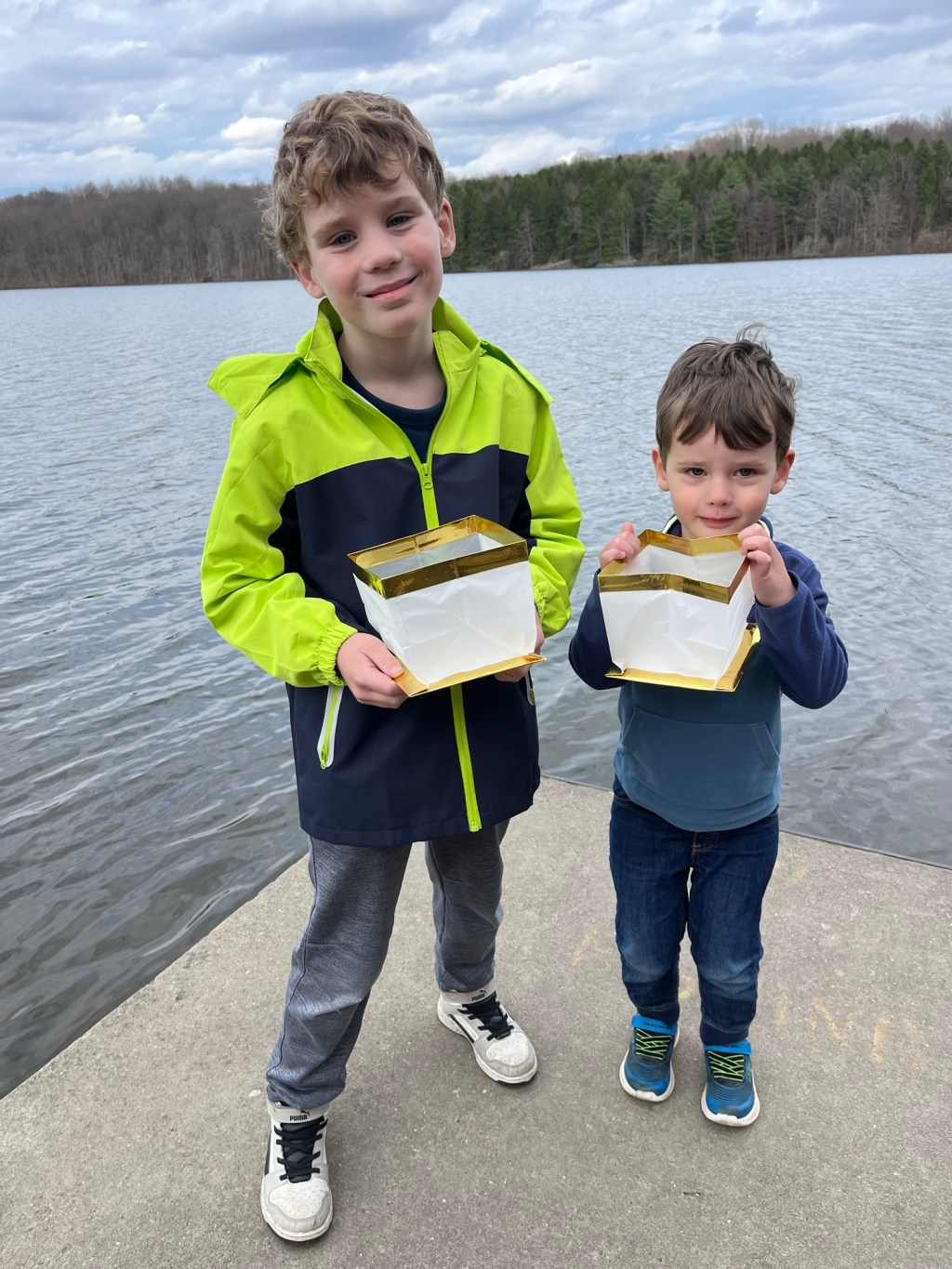
Yet some gaps cannot be filled. Bryce only knows a version of me built on grief and trauma. Landon likely barely remembers the me from “before.” They lost their dad that day, and they also lost a version of me. I often think people are waiting for me to “get back to normal,” not realizing it’s impossible. Some moments are so big as to fracture life into distinct “before” and “after” categories. March 19, 2023, was one of those.
Our boys have many people who love them, but there’s a uniquely fierce and limitless love parents carry. Brian was the only other person in the world who loved them in the same parental boundless capacity. I am now the sole carrier of that love.
I desperately miss sharing that with him. I feel it at every first and last day of school, every birthday, every milestone and at every event where I see children flit between their two parents. I feel it when they do something funny I want to tell him about and I feel it when I’m stretched too thin and need his support. Landon and Bryce don’t even grasp the magnitude of the loss, which only deepens my own sadness and loneliness.
“You’re enough. You’re all they need,” many people have told me. “No I’m not,” I think—not as a self-deprecating response but as an uncomfortably true one. Children are meant to have two parents. Although I am as much as I can be, I can never fill the cavernous gap Brian’s death left: the loss of their father.
Three years in feels like both a lifetime and like no time at all. My love for him didn’t die three years ago; it will live in me always right alongside my grief for him. I also now recognize the need to—and even want to—live intentionally, with purpose and with bravery. It is the hardest thing. The most important things always are.

 The Story of Our Lives
Leave a comment